Hey friends,
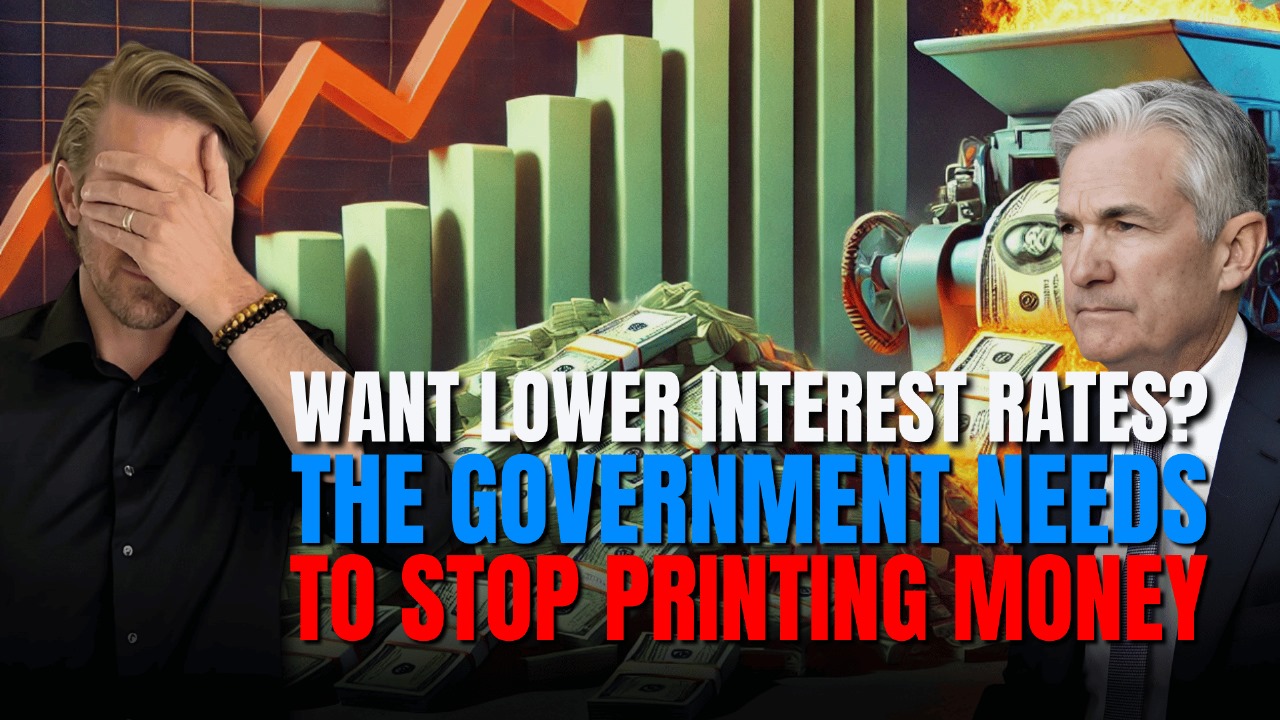
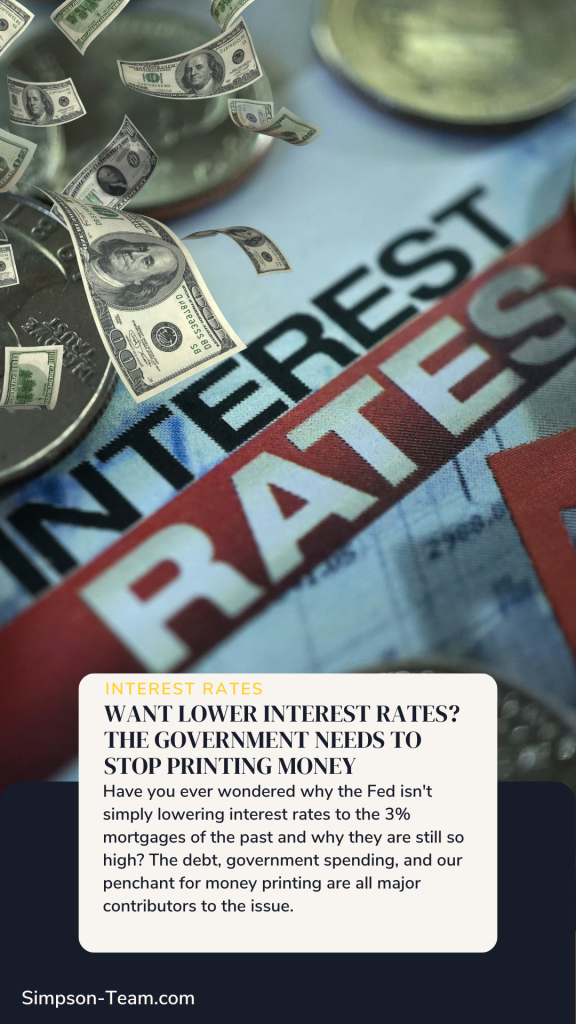
Ever wonder why interest rates are still high and why the Fed isn’t just dropping them back to the good old days of 3% mortgages? Well, a big part of the problem is government spending, the deficit, and our love affair with printing money.
Yeah, I know—government spending is nothing new. But here’s the deal: when we spend more than we take in, we have to borrow money to cover the gap. And that borrowing is directly tied to why interest rates aren’t coming down anytime soon. Let’s break it down.
1. The U.S. Government Is Spending Like There’s No Tomorrow
We’ve been running budget deficits (aka spending way more than we make) for decades, but things have gone into overdrive lately. Trillions are being spent on everything from defense to social programs, infrastructure, and even paying interest on… yep, all the debt we’ve already racked up.
To pay for all this, the U.S. doesn’t just magically make money appear—it has to issue Treasury bonds (basically IOUs) and convince people to buy them. That’s where the trouble starts.
2. Printing Money & Selling Treasuries: How the U.S. Funds Itself
When the government needs cash, it either:
- Collects taxes (not enough to cover spending)
- Borrows by issuing U.S. Treasury bonds
- Prints money (which devalues the dollar and fuels inflation)
Lately, we’ve been going heavy on borrowing and printing money. But every time we do that, we flood the market with new Treasury bonds that need buyers—and the only way to make them attractive is to offer higher interest rates.
3. The More Debt We Have, The Higher Rates Stay
Here’s where it all ties together:
- When the government borrows more, it needs people (or countries like China and Japan) to buy U.S. bonds.
- To make bonds appealing, we have to pay higher interest rates (because investors won’t buy them if rates are too low).
- But when Treasury rates go up, so do mortgage rates, car loans, business loans—everything.
- So as long as the U.S. keeps racking up debt, rates are going to stay high because we need to keep attracting buyers.
4. How Reducing Government Spending Could Help Lower Rates
If the government actually cut spending and reduced the deficit, a few things would happen:
- The U.S. wouldn’t need to sell as many bonds, which means we wouldn’t need to keep offering higher interest rates to attract buyers.
- That would ease pressure on the bond market and help lower borrowing costs across the board.
- The Fed would have more room to cut interest rates without worrying about inflation going wild again.
Basically, less government spending = less borrowing = less upward pressure on rates.
5. Can We Ever Get Out of This Cycle?
Right now, the U.S. is in a debt-and-spending spiral where we have to borrow more just to pay the interest on what we already owe. Until we get spending under control (or somehow grow the economy fast enough to outpace debt), we’re stuck in this cycle where high rates are the only way to keep everything from spinning out of control.
Could we fix it? Sure—spending cuts, entitlement reform, or boosting tax revenue through economic growth could all help. But politically? Yeah… not exactly something Congress likes to do.

Final Thought: What This Means for You
If you’re wondering when rates will come down, keep an eye on how much the government keeps spending and borrowing. Until we cut the deficit or find another way to pay for all this, interest rates are going to stay stubbornly high—because we literally can’t afford to lower them without making the debt situation even worse.
So, next time you hear about trillion-dollar spending plans, just remember: that’s why your mortgage rate isn’t dropping anytime soon.
Location
2020 Lomita Blvd,
Torrance, CA 90101
United States
Pages
Follow us