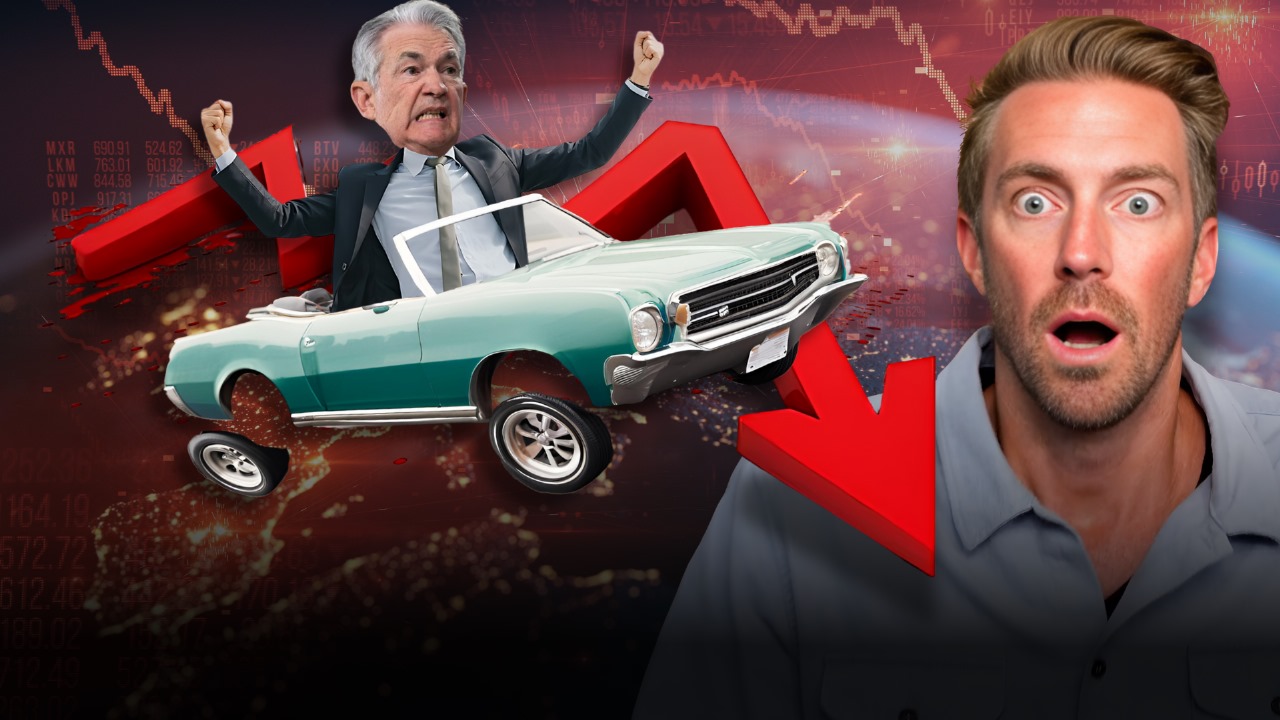
The question of whether the wheels are coming off the economy is complex, but we can look at various economic indicators to understand the current situation.

The question of whether the wheels are coming off the economy is complex, but we can look at various economic indicators to understand the current situation.
The U.S. economy grew at an annual rate of 1.6% in the first quarter of 2024, a significant slowdown from the 3.4% growth in the fourth quarter of 2023. This deceleration reflects increased consumer spending and housing investment, partially offset by declines in inventory investment and rising imports (BEA).
Inflation remains a concern, though it is moderating. The Consumer Price Index (CPI) increased by 3.4% over the past year, indicating that while prices are still rising, the rate of increase has slowed compared to previous months (BLS).
The unemployment rate was stable at 3.9% in April 2024, with job gains in sectors like healthcare, social assistance, and transportation. However, real average hourly earnings decreased slightly, suggesting that wage growth is not keeping pace with inflation (BLS).

Consumer spending has been strong but is expected to slow down. Factors like diminishing excess savings, plateauing wage gains, and the resumption of student loan payments are likely to dampen spending growth (J.P. Morgan | Official Website) (Deloitte United States).
The Federal Reserve has maintained interest rates at 5.25% to 5.5%, the highest in over two decades. There is an expectation of gradual rate cuts starting in mid-2024 if inflation continues to moderate (J.P. Morgan | Official Website).
The overall outlook for 2024 suggests a mixed scenario. The economy is projected to grow, but at a slower pace than in previous years. Economic growth is expected to hover around 0.7% to 1.6% for the year, indicating a potential soft landing rather than a severe downturn (J.P. Morgan | Official Website) (BEA).

Several risks could impact the economy, including:
- Geopolitical Tensions: Conflicts in Europe and the Middle East could disrupt trade and increase oil prices, which would in turn affect inflation and economic growth (Deloitte United States).
- Consumer Debt: Rising consumer debt and potential defaults, especially among subprime borrowers, could weaken consumer spending further (J.P. Morgan | Official Website).
- Fiscal Policy: A larger-than-expected fiscal deficit could become a headwind for economic growth in 2024 as government spending may not provide the same boost as it did in 2023 (J.P. Morgan | Official Website).
While the economy is not falling apart, it is certainly facing challenges that could lead to slower growth. Monitoring key indicators such as GDP, inflation, and the labor market will be crucial in understanding the future trajectory. For now, the U.S. economy is navigating through a period of uncertainty, but it’s not in a dire state.
Location
2020 Lomita Blvd,
Torrance, CA 90101
United States
Pages
Follow us
Proudly powered by WordPress