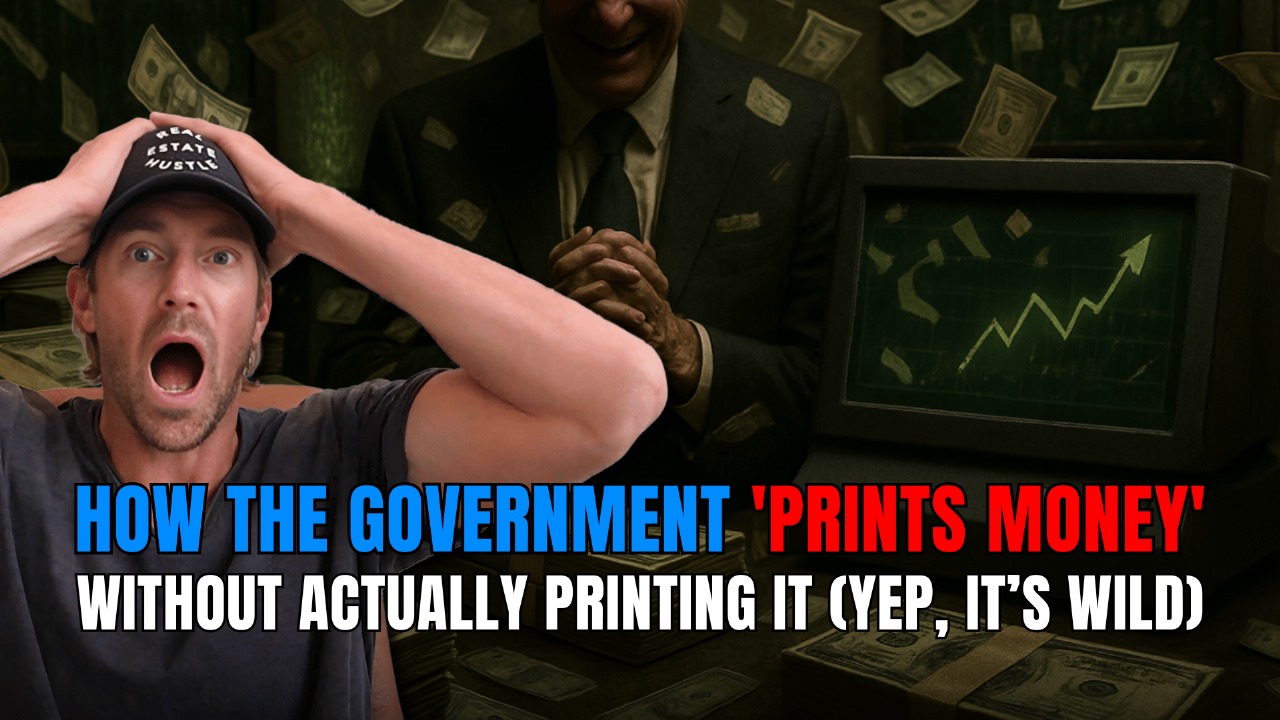

Okay, let’s talk about something that sounds fake but is 100% real:
The Federal Reserve can just make money appear.
No, not with magic. Not with printers. With… keystrokes. 

Let’s break it all down so simple that a kindergartener (or your friend who still thinks Bitcoin is a type of protein shake) could get it.
Step 1: The Government Spends More Than It Makes
Every year, Uncle Sam (aka the U.S. government) collects money from taxes… but guess what?
He spends way more than he brings in.
That’s called a deficit. It’s like having $3,000 in income but spending $4,000 on tacos and Netflix.
So what does the government do?
It borrows the extra money.
How? By selling IOUs called Treasury bonds to investors, countries, banks — anyone who wants a safe(ish) investment.
Keep in mind, the government NOT the FED when they borrower it gets added to our already out of control $37 Trillion DEBT.
Step 2: The Fed Shows Up With Superpowers
Enter: The Federal Reserve (aka “The Fed”). Think of it as the government’s money wizard. 
When the economy needs a boost, or interest rates are too high, the Fed says:
“Hey Treasury, I’ll buy some of those bonds you’re selling.”
But here’s the jaw-drop moment:
 The Fed doesn’t actually have money lying around. It just… creates it.
Yep. It adds digital dollars to banks’ accounts with a few keyboard taps. That money didn’t exist 3 seconds ago — now it does.
It’s like Venmo’ing someone $100 without having $100. Except you’re allowed to because you’re the Fed.
Where Does That New Money Go?
- Banks now have more money to lend.
- Interest rates go down.
- People borrow more (hello, mortgages!).
- Spending and investing go up.
- Economy gets juiced.
Boom. That’s how “money printing” actually works — and no, it doesn’t involve actual printers most of the time.
Does This Add to Our National Debt?
Surprisingly… nope.
The Fed buying bonds doesn’t count as “spending” in the government’s budget.
The deficit is between the Treasury’s income and spending, not what the Fed is doing on the sidelines.
So when the Fed buys bonds, it’s not racking up new debt, it’s just shuffling money into the economy.
Can the Fed Just Keep Making Money Forever?
Technically… yes.
But should they? Heck no.
Here’s why:
- Too much money = inflation (aka your dollar buys less)
- Inflation = angry people at grocery stores

- Too much Fed “printing” could crush the dollar, scare investors, and mess with the whole system
So the Fed has to be careful — it’s a balancing act between keeping the economy rolling without blowing it up.

How Does the Fed Take the Money Back Out?
Think of the economy like a bathtub full of money. The Fed filled it up — now it needs to drain some water.
Here’s how they do that:
- Sell the bonds they bought — people pay the Fed → money disappears from the system
- Let bonds expire and don’t replace them → slowly shrinks the Fed’s balance sheet
- Raise interest rates → people borrow less, spend less → economy cools down
Boom — faucet off, drain open. That’s the Fed’s version of a financial detox.
So How Big Is the Fed’s Balance Sheet Now?
As of this month, it’s around $6.8 trillion.
Yeah… trillion with a “T.”
That’s like stacking dollar bills to the moon and back. Multiple times. 

The Bottom Line:
- The government borrows when it overspends.
- The Fed can create money by buying government debt.
- It doesn’t add to the deficit — but it does affect inflation, interest rates, and your mortgage.
- And yes, it’s just as wild as it sounds.
Location
2020 Lomita Blvd,
Torrance, CA 90101
United States
Pages
Follow us