
There’s always been a big debate when it comes to debt—Is it good or bad? Should you avoid it at all costs, or is it a tool that can help you build wealth? Being in the mortgage business for 20 years I have witnessed the good, bad and ugly of debt in so many clients. In My option debt can be good and bad, in a perfect world we would use it and pay it off quickly but let’s be honest, that is not possible for most.
Two of the biggest voices in personal finance have very different takes on this:

Dave Ramsey says all debt is bad. If you can’t pay cash for it, you can’t afford it. His approach is simple: avoid debt like the plague, focus on saving, and never borrow—even for a home or business.

Robert Kiyosaki (the guy behind Rich Dad, Poor Dad) says that some debt is actually good—as long as it’s making you money and others pay for it. He believes that using debt to invest in assets like real estate or businesses is the smartest way to build wealth.
So, who’s right?
The truth is, it depends on how you use debt.
Good debt – Investments that generate income, like real estate, a business, or education that increases earning potential. This type of debt works for you.
Bad debt – Credit cards, car loans, or anything that loses value and keeps you stuck in monthly payments with no return. This type of debt works against you.
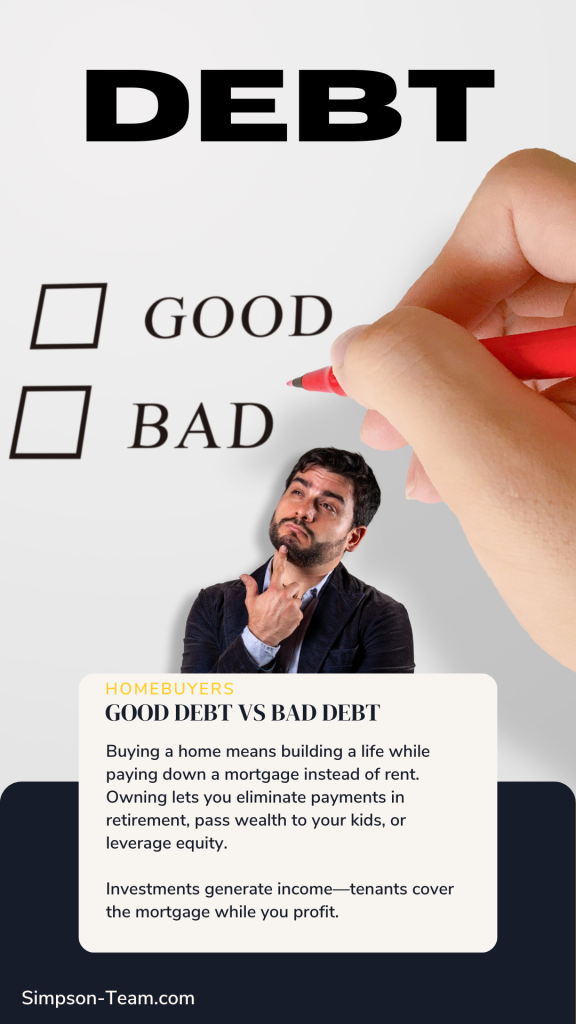
In a perfect world we would ALL be debt free and pay cash for everything, even the wealthiest of them all. The fact is without debt most would only get so far and they would have been only to grow so fast and so BIG.
When it comes to buying real estate, it is very simple. Your primary property is your home, where you live, build a life, raise a family and the place you could live for 10,20,30 + years. If you did not own a home, you would rent and have that monthly payment. Owning a primary, paying it off overtime and having the ability to use that in your future to pay bills, pass to kids or NOT have a mortgage payment when you get into retirement years is a game changer. Buying an investment property is the opposite, you buy it, put the money down, fix it up if you must, let the tenants pay your mortgage and hope you can cashflow as well. A primary house is a monthly liability that has to be paid for and that is why most don’t like that debt, so paying that down as soon as possible for most is so important at the end of the day.
At the end of the day, debt isn’t the problem—it’s how you manage it. If debt is making you money and increasing your net worth, it’s a tool. If it’s draining your bank account, it’s a trap.
Location
2020 Lomita Blvd,
Torrance, CA 90101
United States
Pages
Follow us