

Breaking Down DOGE: What You Need to Know About Trump’s Cost-Cutting Board
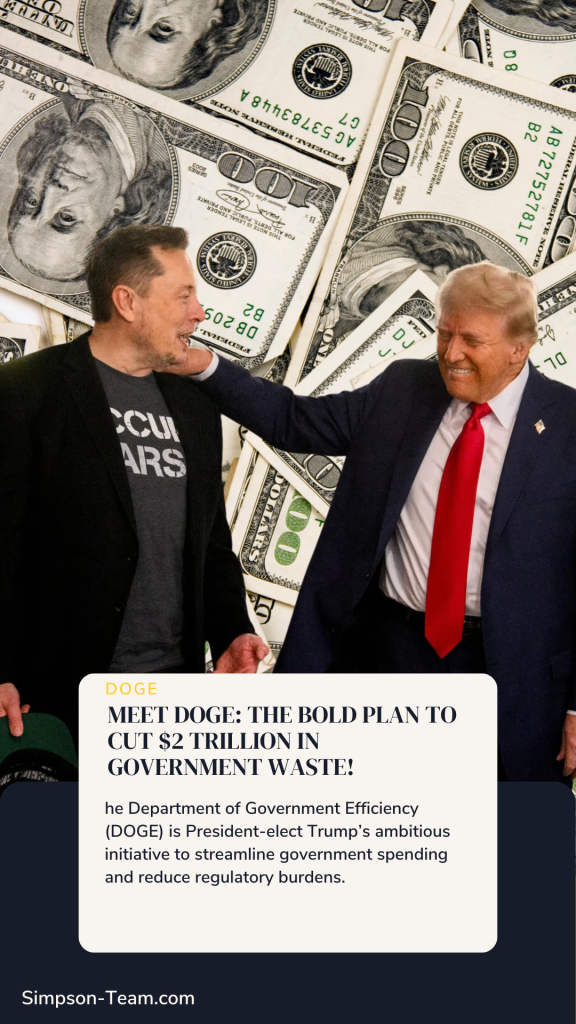
The Department of Government Efficiency (DOGE) is President-elect Trump’s ambitious initiative to streamline government spending and reduce regulatory burdens. Led by Elon Musk and Vivek Ramaswamy, DOGE has raised many questions about its structure, goals, and how it may impact businesses, federal agencies, and public programs. Let’s break it down into the essentials so it’s easy to understand.
What Is DOGE?
DOGE is designed to tackle inefficiency in government by cutting wasteful spending, reducing regulations, and overhauling the federal workforce. While its exact structure remains unclear, DOGE could operate as:
- A Federal Advisory Committee (FAC): If so, it would be subject to transparency, public records, and conflict-of-interest requirements.
- An Independent Entity: If DOGE operates outside government as a think tank or nonprofit, it wouldn’t face the same legal and transparency requirements, giving it more flexibility.
DOGE’s classification will determine its authority and how it engages with the public.
What Are DOGE’s Goals?
DOGE is focused on three main areas:
Reducing Federal Agencies and Regulations:
DOGE wants to eliminate or consolidate 75% of federal agencies, targeting entities like the Consumer Financial Protection Bureau and Department of Education.
It also plans to scale back regulations using recent Supreme Court rulings that limit agency authority.
Cutting Spending:
DOGE aims to slash up to $2 trillion in federal spending by targeting:
Programs deemed wasteful, like DEI training and certain international grants.
Unreviewed government contracts, with audits planned to identify overbilling or inefficiencies.
Expired appropriations (though legal challenges are likely if funding cuts affect popular programs like veterans’ benefits or Pell Grants).
Streamlining the Federal Workforce:
DOGE plans to shrink the government workforce by:
Ending remote work.
Relocating agencies outside of D.C.
Offering early retirement and severance packages.
There’s also talk of reviving “Schedule F,” which would turn many federal jobs into political appointments.
How Might DOGE Operate?
If DOGE is classified as a Federal Advisory Committee (FAC), it will:
- Follow strict transparency rules (e.g., public meetings and accessible records).
- Advise Trump and federal agencies without having direct authority to implement changes.
If DOGE operates independently, it can:
Focus on publishing reports, advising the president, and lobbying Congress.
Skip transparency and conflict-of-interest requirements.
Challenges DOGE Faces
Despite its ambitious plans, DOGE will encounter obstacles:
Logistical Complexity: Streamlining agencies and workforce reductions could take years to implement.
Legal Hurdles: Federal laws restrict the president’s power to withhold funds or bypass Congress on spending cuts.
Political Resistance: Cuts to programs like Medicare, Social Security, and defense spending will likely face bipartisan pushback.
What’s Next for DOGE?

DOGE plans to involve the public by crowdsourcing ideas to identify wasteful spending and offering updates through a podcast. Businesses can prepare for DOGE by:
Preparing to challenge burdensome regulations in court, leveraging DOGE’s focus on deregulation.
Monitoring which programs or contracts are at risk.
Advocating directly to DOGE or Congress to protect their interests.

How DOGE Could Benefit Real Estate
While DOGE’s focus is on cutting costs and streamlining government, its initiatives could positively impact the real estate sector. By reducing red tape, consolidating agencies, and scaling back regulations, real estate developers and investors may find it easier to navigate zoning laws, secure permits, and access federal programs.
Additionally, DOGE’s plans to relocate federal agencies outside of D.C. could spur economic growth in new regions, creating opportunities for housing development and boosting property values in those areas. If executed well, these changes could lead to a more efficient, business-friendly environment for the real estate industry.
As the details of DOGE unfold, it’s clear that its influence could reshape more than just government—it could unlock new possibilities in real estate for buyers, sellers, and investors alike.
Key Takeaways
- Big Picture Goal: DOGE aims to make the government leaner, cutting $2 trillion in spending and reducing bureaucracy.
- Impact on Agencies: Expect fewer regulations, agency consolidations, and potential cuts to federal programs.
- Business Implications: Federal contractors and businesses dependent on regulated industries should stay informed and proactive.
DOGE may spark significant changes, but its ambitious goals will face legal and political challenges. Whether it succeeds or stumbles, DOGE will be a focal point for government reform under Trump’s administration.
Location
2020 Lomita Blvd,
Torrance, CA 90101
United States
Pages
Follow us